

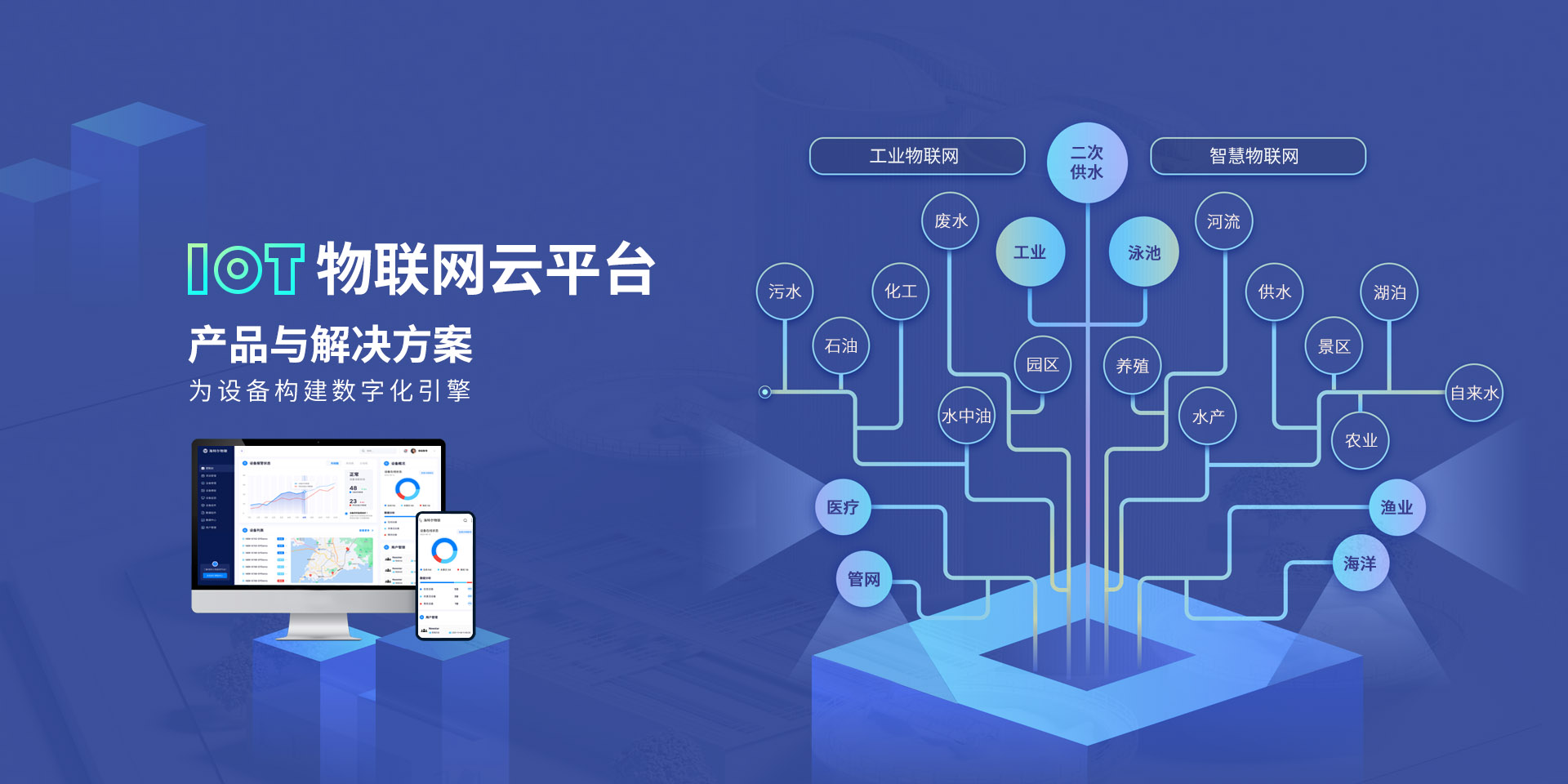
Secondary Water Supply
Secondary Water Supply Monitoring Solution The secondary water supply monitoring solution leverages advanced sensor technology, the Internet of Things (IoT), big data analytics, and artificial intelligence (AI) to enable real‑time monitoring and management of key parameters such as water quality, water pressure, and flow rate in urban secondary water supply systems. This ensures safe and stable water supply and meets the water demand of residents. I. Solution Objectives Ensure Water Supply Safety: Real‑time monitoring of water quality parameters to ensure compliance with national drinking water standards. Optimize Water Supply Efficiency: Monitor water pressure and flow rate to allocate water resources rationally and reduce waste. Prevent Potential Hazards: Promptly detect problems such as leaks, contamination, or equipment failures, thereby reducing risks. Support Smart Management: Integrate IoT technologies to enable remote monitoring and data analysis. II. Key Monitoring Parameters 1. Water Quality Turbidity: Indicates the content of suspended particles in water, affecting clarity. Range: ≤1 NTU. pH: Reflects water acidity/alkalinity; extremes may corrode pipes or affect health. Range: 6.5–8.5. Residual Chlorine / Total Chlorine: Ensures sufficient disinfectant is present to kill bacteria. Range: 0.05–0.3 mg/L. Electrical Conductivity: Indirectly reflects mineral content in water. Range: Varies by region. Total Bacterial Count & Coliforms: Assess microbial contamination. Total bacterial count: ≤100 CFU/mL; Coliforms: not detectable. 2. Water Pressure Significance: Ensures stable water pressure, avoiding inconvenience or pipe damage due to insufficient or excessive pressure. Typical range: 0.2–0.4 MPa (adjusted according to actual requirements). 3. Flow Rate Significance: Analyzes water consumption patterns, optimizes water resource scheduling, and detects pipeline leakage. Range: Adjusted dynamically based on regional water demand. 4. Water Level Significance: Monitors water level in storage tanks or reservoirs to ensure adequate supply and prevent overflow or dry running. Range: Set reasonable thresholds based on tank capacity. III. System Architecture Perception Layer Deploy multi‑parameter water quality sensors (e.g., for turbidity, pH, residual chlorine, conductivity) for real‑time data acquisition. Install pressure sensors, flow meters, and water level gauges to monitor pressure, flow, and water level. Place sensors at the inlet, outlet, and key nodes of the secondary water supply system. Network Layer Use wireless communication technologies (NB‑IoT, LoRa, 5G) to transmit collected data to the cloud or monitoring center. Ensure communication network stability and security. Platform Layer Build an IoT cloud platform for data storage, processing, and analysis. Provide data visualization interfaces for managers to view real‑time water supply status. Application Layer Develop web and mobile applications supporting remote monitoring, alert notifications, and data analysis. Offer automated control functions (e.g., pump start/stop, chemical dosing system control). IV. Core Functions Real‑time Monitoring Continuous 24/7 monitoring of key parameters (water quality, pressure, flow, level) with dynamic data charts. Intelligent Alerting Set threshold ranges; automatically trigger alarms when monitored data exceeds normal limits. Multi‑channel notifications (SMS, email, push notifications). Automated Control Automatically adjust equipment states based on monitoring data. Example: Start a booster pump when water pressure is insufficient; activate the chemical dosing system when water quality is abnormal. Data Analysis & Decision Support Predict water supply trends and assess equipment operating status using historical data and machine learning algorithms. Provide science‑based water supply management recommendations (e.g., water exchange cycles, maintenance schedules). Remote Management Users can remotely view water supply status and control related equipment via mobile phone or computer. V. Implementation Steps Needs Assessment Analyze the scale, purpose, and water quality requirements of the secondary water supply system to define monitoring needs. Identify key parameters and critical nodes. Solution Design Select appropriate sensor types and technical solutions based on requirements. Design data acquisition, transmission, and processing workflows. Equipment Deployment Install sensors, communication modules, and other related equipment at key nodes of the secondary water supply system. Establish a communication network to ensure smooth data transmission. System Integration Integrate the perception, network, and platform layers into a complete system. Conduct joint debugging and testing to verify system functionality. Operation & Maintenance Regularly maintain monitoring equipment to ensure proper operation. Continuously optimize system performance to meet practical needs. VI. Application Scenarios Residential Communities: Monitor water quality, pressure, and flow in building‑level secondary water supply systems to ensure residential water safety. Commercial Buildings: Office towers, shopping malls, etc., requiring comprehensive water quality monitoring and automated control. Hospitals and Schools: Strict water quality control to meet hygiene requirements in special premises. Industrial Parks: Optimize the operational efficiency of secondary water supply systems based on industrial water demand. VII. Advantages Real‑time Capability: Real‑time data acquisition and transmission for rapid response to anomalies. Accuracy: High‑precision sensors and data analysis techniques ensure reliable monitoring results. Economy: Reduce manual inspection costs and extend equipment service life. Scalability: Support integration with other smart city systems to create synergistic effects. Security: Encrypted data transmission ensures information security; real‑time alerts reduce accident risks. The secondary water supply monitoring solution achieves refined and efficient water supply management through intelligent means. It not only improves water supply quality but also promotes the sustainable development of modern urban management.


 Network Security Record No. 37021402001393 (Shandong)