Conductivity
Conductivity is a parameter used to describe the ease with which electric charge flows through a material. In formulas, conductivity is represented by the Greek letter σ. The standard unit of conductivity σ is Siemens per meter (abbreviated as S/m), which is the reciprocal of resistivity ρ, i.e., σ = 1/ρ. When a current of 1 ampere (1 A) passes through a cross-section of an object with a voltage of 1 volt (1 V) applied, the conductance of the object is 1 Siemens, which is actually equivalent to 1 ampere per volt. If G is conductance (in Siemens), I is current (in amperes), and U is voltage (in volts), then: G = I / U. Conductivity σ can be calculated using conductance G, the cross-sectional area A of the conductor, and the length l of the conductor: σ = G · l / A.
Measuring Principle
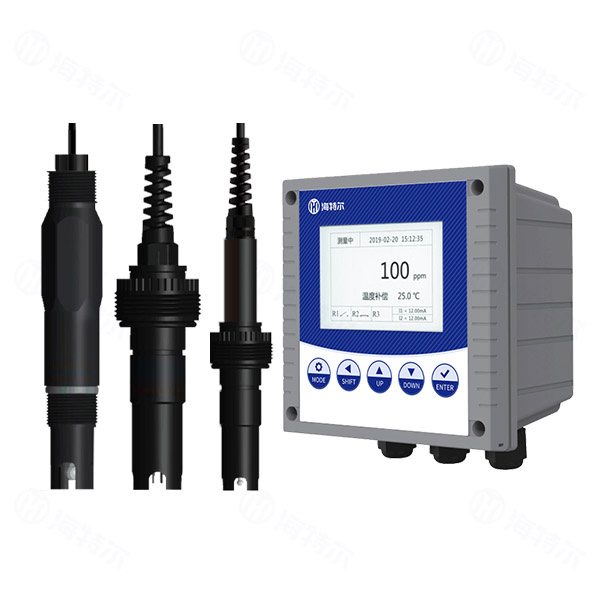
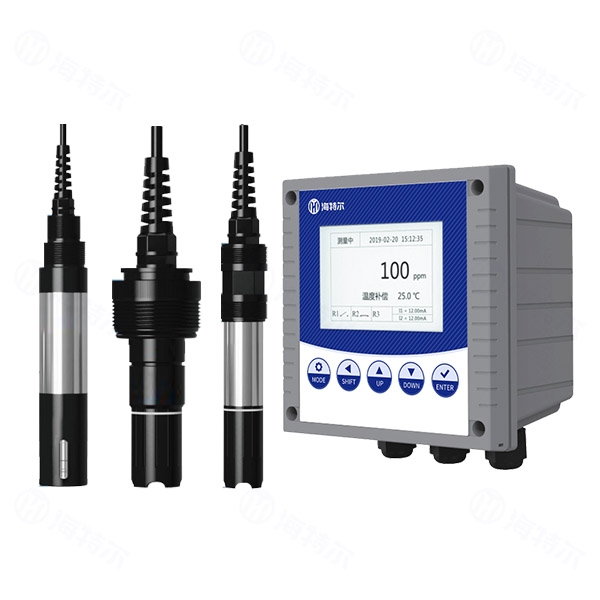
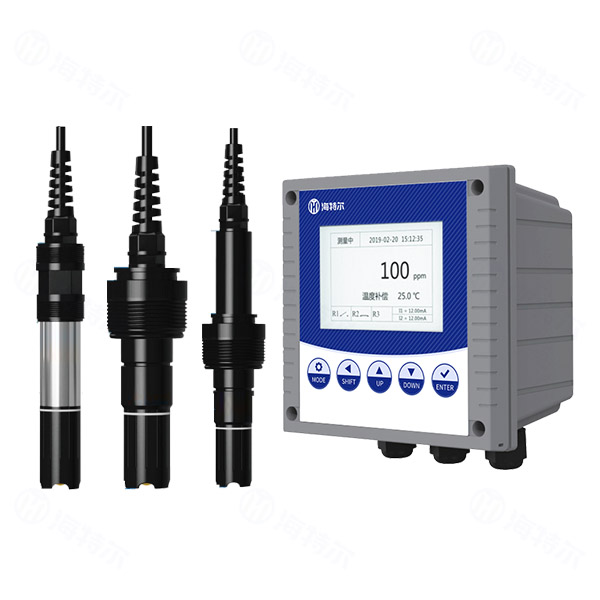
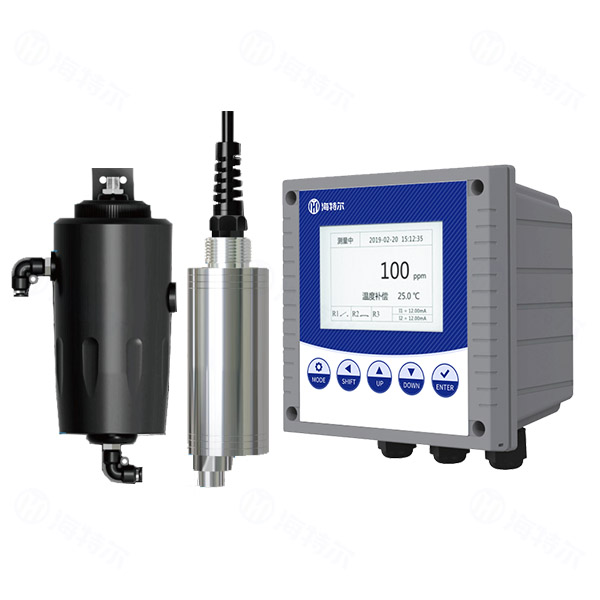
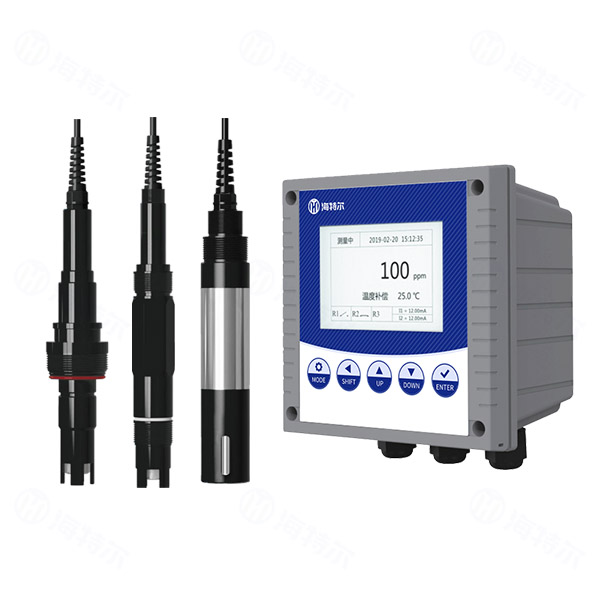
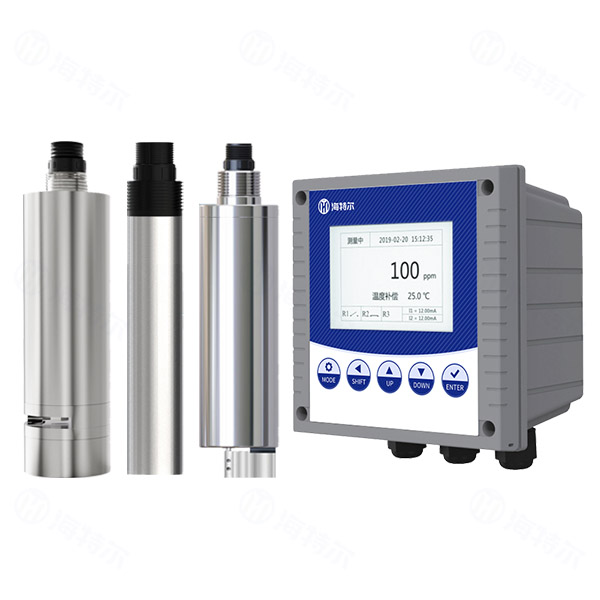
The measuring principle of conductivity involves placing two parallel plates (or cylindrical electrodes) separated by a fixed distance L into the solution to be measured, and applying a certain potential across the plates (typically a sinusoidal voltage to avoid electrolysis of the solution, with a frequency of 1–3 kHz). Conductivity measurement requires two pieces of information: the conductance G of the solution, and the cell constant Q of the conductivity cell. Conductance can be obtained by measuring current and voltage. The conductivity value is then obtained according to the formula K = Q × G. This measuring principle is widely used in direct-reading display instruments. The earliest method used in conductivity measurement was the AC bridge method, which directly measured the conductance value. The most commonly used instruments are equipped with a constant adjuster, a temperature coefficient adjuster, and an automatic temperature compensator. The primary part consists of a conductivity cell and a temperature sensor, which can directly measure the conductivity of an electrolyte solution.
Measuring Method
Conductivity measurement typically refers to the measurement of the conductivity of a solution. The resistivity of a solid conductor can be measured using Ohm's law and the law of resistance. For the measurement of electrolyte solution conductivity, an AC signal is generally applied to the two electrode plates of the conductivity cell, and the conductivity σ is obtained from the measured cell constant K and the conductance G between the two plates.
Application scope: Paper mills, nuclear power plants, food processing, chemical and oil refining, water treatment plants, biopharmaceuticals, etc.
Conductivity
Conductivity is a parameter used to describe the ease with which electric charge flows through a material. In formulas, conductivity is represented by the Greek letter σ. The standard unit of conductivity σ is Siemens per meter (abbreviated as S/m), which is the reciprocal of resistivity ρ, i.e., σ = 1/ρ. When a current of 1 ampere (1 A) passes through a cross-section of an object with a voltage of 1 volt (1 V) applied, the conductance of the object is 1 Siemens, which is actually equivalent to 1 ampere per volt. If G is conductance (in Siemens), I is current (in amperes), and U is voltage (in volts), then: G = I / U. Conductivity σ can be calculated using conductance G, the cross-sectional area A of the conductor, and the length l of the conductor: σ = G · l / A.





 Network Security Record No. 37021402001393 (Shandong)